
Key Takeaways
- Indoor and outdoor events require different catering menu structures due to food safety, holding time, and service logistics.
- Outdoor catering in Singapore increases exposure to heat, humidity, insects, and venue constraints, which directly changes menu composition and portion planning.
- Catering menus designed for air-conditioned venues often underperform outdoors due to texture breakdown, condensation, and temperature instability.
- Event organisers who do not adjust their catering menu for outdoor setups face higher wastage, food safety risks, and service delays.
Introduction
Catering in the city-state is highly sensitive to venue conditions due to the climate, regulatory requirements, and service expectations of corporate and private clients. A catering menu that performs well in air-conditioned ballrooms, function rooms, or office spaces can fail operationally when the same event is moved outdoors to gardens, rooftops, open decks, or beachside venues. The change in environment affects food holding time, temperature control, service flow, staffing load, and compliance with food safety standards. Event organisers who treat indoor and outdoor catering menus as interchangeable often encounter food quality degradation, higher wastage, and operational breakdowns that could have been avoided with proper menu restructuring.
Temperature, Humidity, and Food Stability
The most immediate change when moving from indoor to outdoor setups is temperature control. Cold dishes in air-conditioned venues maintain structure, sauces remain emulsified, and proteins hold texture within predictable service windows. Outdoors, the region’s humidity and heat accelerate moisture loss, condensation, and bacterial growth risks. This situation directly changes the catering menu composition. Cream-based canapés, chilled seafood platters, dairy-heavy desserts, and lightly dressed salads are higher risk outdoors and require shortened holding times or replacement with items that remain stable under ambient conditions. Hot dishes also degrade faster outdoors because steam escapes quickly, food skins over, and heat retention drops without thermal equipment. Catering that is structured for outdoor venues typically reduces fragile cold items, avoids rapidly oxidising foods, and prioritises dishes that maintain texture after exposure, such as dry-glazed proteins, firm starches, and baked items with controlled moisture.
Service Flow, Holding Equipment, and Layout Constraints
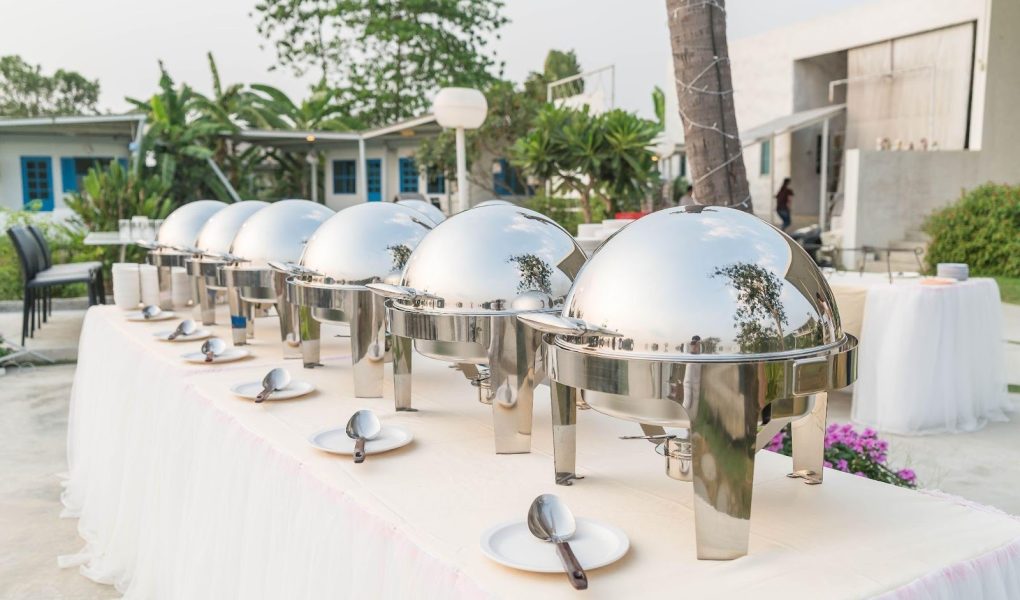
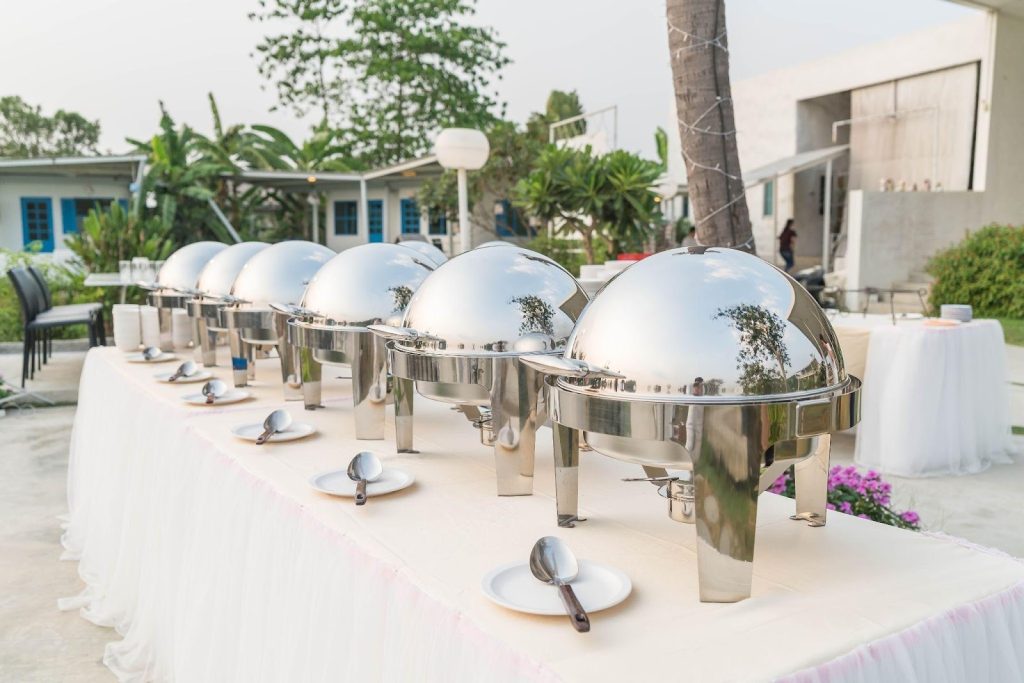
Indoor venues provide predictable access to power points, warming stations, cold storage, and food holding infrastructure. Outdoor setups limit this control. Catering menus must be designed around transportability, holding resilience, and equipment availability. Outdoor venues may restrict open flames, electrical load, or placement of chafing dishes, which directly limits menu variety. Service flow is also affected by uneven ground, longer walking distances, and exposure to weather. A catering menu that relies on high-frequency replenishment, precise plating, or fragile garnishes performs poorly when staff movement is slowed and staging space is constrained. Catering that is planned for outdoor execution often shifts towards modular menus, larger batch-friendly items, and simplified finishing steps that can be executed with limited equipment without compromising safety or consistency.
Food Safety Compliance and Regulatory Exposure
Outdoor catering increases regulatory exposure because temperature control, food protection, and hygiene risks are harder to manage in open environments. A catering menu that is compliant indoors may fail inspection outdoors if food is left exposed, temperature logs cannot be maintained, or pests become a contamination risk. This instance forces caterers to redesign menus to reduce high-risk items, minimise exposed plating time, and simplify service sequences. Finger foods that require prolonged display, raw or lightly cured proteins, and open buffet layouts carry a higher compliance risk outdoors. Catering that is structured for outdoor venues often limits raw components, reduces display time for chilled items, and restructures buffet layouts to allow faster turnover and better coverage without breaching food safety protocols.
Portion Control, Wastage, and Guest Behaviour
Guest behaviour changes outdoors. Movement patterns are less predictable, consumption pacing varies, and food exposure to heat reduces holding life. Catering menus designed for indoor banquets assume controlled service windows and predictable traffic flow. Outdoors, portions need adjustment to prevent over-preparation and quality loss. Foods that degrade quickly outdoors lead to higher wastage if portion planning is not tightened. Catering in Singapore, particularly for outdoor events, typically shifts towards smaller batch production cycles, shorter menu rotations, and items that can be replenished without quality loss, reducing wastage while maintaining service continuity.
Conclusion
A catering menu cannot remain static when events move from indoor venues to outdoor setups. The operational, safety, and quality risks change materially, and menus must be restructured to suit environmental conditions rather than branding preferences. Catering that performs consistently across venues is built on menu engineering, not menu replication.
Contact Elsie’s Kitchen to plan your event menu with caterers who already account for heat exposure, holding time, and environmental service constraints.